
Hello and welcome. In this article, we'll examine relevant texts concerning Polycarp of Smyrna and the timing of his baptism, as well as similar texts to determine whether there is strong evidence that he was baptized in infancy. The question of Polycarp's baptism is a critical piece of the puzzle regarding Paedobaptism and its historical development. To get a primer on what theologians and historians have said on the development of infant baptism, we recommend reading this article here. We also recommend checking out our brief introduction article on the proper recipients of baptism from historical perspectives, available here.
WHO WAS POLYCARP OF SMYRNA?
Polycarp of Smyrna was a notable Christian leader in the early to mid-2nd century, located in what is now modern-day Turkey. He wrote a letter to the Christians in Philippi, usually dated between 120 and 140 AD. Later in his life, he died a martyr by being burned at the stake. Some time after his death, a narrative of the events was recorded in the Martyrdom of Polycarp. One of the most important aspects of Polycarp historically is that various sources claim he had a direct connection with the apostles. Let's take a look at what they said about Polycarp.

Ignatius of Antioch, ? AD - 108 AD
“Ignatius, who is also Theophorus, unto Polycarp who is bishop of the church of the Smyrnaeans or rather who hath for his bishop God the Father and Jesus Christ, abundant greeting.” - Letter to Polycarp, Chapter 0:0
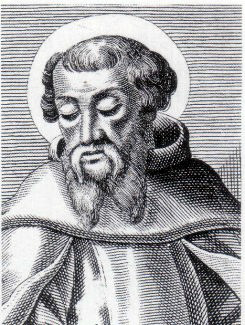
“But Polycarp also was not only instructed by apostles, and conversed with many who had seen Christ, but was also, by apostles in Asia, appointed bishop of the Church in Smyrna, whom I also saw in my early youth, for he tarried [on earth] a very long time, and, when a very old man, gloriously and most nobly suffering martyrdom, departed this life, having always taught the things which he had learned from the apostles, and which the Church has handed down, and which alone are true.” - Against Heresies, Book III, Chapter III, Section 4

“For this is the manner in which the apostolic churches transmit their registers: as the church of Smyrna, which records that Polycarp was placed therein by John;” - The Prescription Against Heretics, Chapter XXXII

“Polycarp disciple of the apostle John and by him ordained bishop of Smyrna was chief of all Asia, where he saw and had as teachers some of the apostles and of those who had seen the Lord.” - Lives of Illustrious Men, Chapter XVII
In these historical sources on Polycarp, we first see, with Ignatius in the early 2nd century, that he was a bishop in Smyrna. Decades later, Irenaeus also mentions this leadership role of Polycarp, but provides additional details. Irenaeus states that he personally saw Polycarp in his own youth and emphasizes that Polycarp was a very old man at that time. We are then told that Polycarp was instructed by the apostles, learned from them, and met with many people who had seen Jesus during his earthly ministry. In Tertullian, we are given essentially the same piece of information that we see from Ignatius, but with the added detail that John had a hand in putting Polycarp in his role of bishop. Lastly, at the end of the 4th century, Jerome references all of these historical pieces together. We see the discipleship under the apostle John, his leadership role in Smyrna, being taught by the apostles, and knowing others who saw Jesus.
With these sources in view, we now have a solid understanding of who Polycarp was and his connection to other important figures in early Christianity.
THE ARGUMENT FOR POLYCARP'S BAPTISM IN INFANCY
"But when the magistrate pressed him hard and said, 'Swear the oath, and I will release thee; revile the Christ,' Polycarp said, 'Fourscore and six years have I been His servant, and He hath done me no wrong. How then can I blaspheme my King who saved me?'" - The Martyrdom of Polycarp, 9:3
In this document, which retells the events of Polycarp's martyrdom some time after it took place, it says that Polycarp was told he would be freed if he reviled and blasphemed Jesus. His response in the next sentence is the complete basis for arguing that Polycarp was baptized in infancy, and consequently, that Paedobaptism is an apostolic practice dating to the time of the apostles. Let's lay out a summary of the argument.
1. When Polycarp says he has "been His [Christ's] servant", this means he has been a Christian.
2. Being a Christian/servant of Christ necessarily includes receiving water baptism as a prerequisite to or coinciding with the beginning of this status.
3. When Polycarp says "Fourscore and six years", he means to point out his age. Since he was martyred shortly after this statement, that means he died when he was 86 years old.
4. Therefore, Polycarp has been a Christian/servant of Christ since birth or practically immediately after.
5. It follows then that Polycarp was baptized in infancy as a newborn, since baptism is a prerequisite or coinciding event with the status of being a Christian/servant of Christ.
6. Because Polycarp's death is dated by some as early as the year 155, it would mean that Polycarp was baptized in infancy as early as 69, which would make infant baptism a practice during the time of the apostles.
Now that we've laid out a summary of the argument and set the stakes, let's look at a few comments from Paedobaptists articulating this argument.
“However one dates the martyrdom, the conclusion is inevitable that the eighty-six years for which Polycarp had served Christ up to the time of his death more or less cover his whole life. But then his parents must have been Christians (or at least must have become Christians very soon after his birth). Thus we have most probably in Mart. Polyc. 9.3 an indirect confirmation given us of the practice of infant baptism in the years round about AD 80.” - Jeremias, Infant Baptism in the First Four Centuries, p. 63
“This confession does not indeed mention baptism. Yet it permits an inference to be made…Thus Polycarp reckons his ‘service of Christ’ from his birth. This shows at any rate that his parents were already Christians, or at least were converted quite soon after his birth. If his parents were pagan at his birth, he would have been baptized with the ‘house’ at their conversion. But even if his parents were Christians, the words ‘service of Christ’ for eighty-six years supports a baptism soon after his birth,” - Jeremias, The Origins of Infant Baptism, p. 58
Among apologetic defenses of infant baptism in recent history, we first see this argument clearly in Joachim Jeremias' book "Infant Baptism in the First Four Centuries", which was published in 1960. His work became a sourcebook of arguments and prooftexts that Paedobaptists utilize to this day in other books and digital media, as we see below.
“The account reports that when Polycarp was commanded to revile Christ, he answered, “For eighty-six years I have served him, and he never did me any wrong. How can I blaspheme my King who saved me?” Since the ancient sources allow us to date this event to probably no later than 167-68 AD, it would mean that Polycarp had been born around the year 80 AD. Because his statement was obviously meant to cover the entirety of his life, it is probable that he had been born of Christian parents, and thus may be an indirect reference to his own baptism as an infant in that time period.” - Holstrom, Infant Baptism and Silence in the New Testament, p. 86
“Now, it is well documented that "The Martyrdom of Polycarp" was written the year after the saint's execution; and so the quote above is extremely reliable. It is also well documented that Polycarp was 86 years old at the time of his death. Therefore, if the saint claims to have served Jesus for 86 years, it therefore follows that he was Baptized as an infant.” - ServantOfChrist, Evidence for Infant Baptism in the Church Fathers and Inscriptions
“From the beginning of New Testament Christianity at Pentecost to our time, unbroken and uninterrupted, the Church has baptized babies. Polycarp (69-155 AD), a disciple of the Apostle John, was baptized as an infant.” - Bryan Wolfmueller, Historical Examples of Infant Baptism
"Having been eighty-six years old at the time of his death, Polycarp’s statement must then refer to the commencement of his Christian service at birth, that is, to his baptism as an infant. We therefore take Polycarp’s infant baptism as evidence of the antiquity and apostolicity of the practice.” - The North American Anglican, A Treatise In Defense of Infant Baptism, Section 2A
“We also have multiple statements from early church fathers attesting to infant baptism as something that came from the apostles. And we have cases like St. Polycarp of Smyrna who was martyred around AD 155 and had been born around AD 69 within the apostolic age. At the time of his martyrdom he said that he had served Christ or been a Christian for 86 years which would place his baptism when he was an infant." - Jimmy Akin, Infant Baptism: An Overlooked Argument, 0:19-0:43
Now that we have outlined the argument for Polycarp's baptism in infancy and, as a result, the argument that paedobaptism is an apostolic practice, let us outline our concerns and objections to this argument and examine the relevant data and historical sources to determine whether Polycarp was baptized in infancy.
OUTLINING THE POINTS OF OUR RESPONSE TO THE ARGUMENT
In the rest of this article, we will unpack various issues, objections, and historical data against the argument for Polycarp's baptism in infancy. From the outset, one of the difficulties in addressing this argument is how heavily it relies on inferences and certain presuppositions. This argument is not built on a text about baptism or even a collection of related evidence from what early Christian sources said about various topics. Polycarp's epistle to the Philippians doesn't mention baptism even in passing, so there's nothing we can pull from his own writings. As a result, we won't be able to build our response and counter-arguments around what Polycarp said about baptism. There's simply not an argument that could be built on that topic from his own writings. As a result of necessity, we are forced to turn elsewhere for arguments. The following points summarize the majority of what we'll be covering moving forward.
1. One concern we have is a potential double standard from Paedobaptists. It's common in dialogue on this topic for Credobaptists to appeal to sources that speak of baptism, with the source seemingly having only believers' baptism in mind when we focus on the contextual details. In response, Paedobaptists will often object and dismiss this appeal immediately because the source doesn't explicitly say something like "don't baptize infants." Therefore, Credobaptists can't use that source to support their views. Yet, as we've seen in the argument for Polycarp's baptism in infancy, Paedobaptists have no problem appealing to sources that don't mention baptism at all and build their argument by pulling together multiple inferences. However, if we consistently apply the common objection and dismissal of Credobaptist sources, we should also dismiss arguments such as this because it doesn't explicitly say something like "baptize infants" or "don't baptize believers only".
2. A critical crux of the argument is that Polycarp had the entirety of his life in view when he mentioned eighty-six years. Even if the rest of the inferences and points are granted, the entire argument fails or loses the majority of its force if Polycarp is not referring to his entire life. If he's not making that reference, and we grant that baptism precedes or coincides with serving Jesus, then Polycarp would not have been baptized as a newborn infant. Instead, he would have been baptized at some later point, which undermines the force of this argument. On this point, various Paedobaptists don't assume or take it for granted that Polycarp is referencing his entire life in his key statement and see it as a speculative and uncertain point.
3. Building on the above point, there are historical texts that indicate Polycarp lived longer than the years he mentioned before his martyrdom. If that were the case, the argument would likewise fail.
4. Furthermore, when we examine details we're told about Polycarp's life from other sources, the details don't neatly fit on a timeline when combined with the view he had the entirety of his life in view when he mentions eighty-six years. There are also issues regarding the dating of Polycarp's death. The Paedobaptist argument seems heavily reliant on a specific dating option that does not neatly align with multiple historical sources on the topic.
5. Another of the cruxes for the Paedobaptist argument about Polycarp is the idea that being Jesus' servant in this case and others commonly extended back to birth and infancy. However, there are contemporary 2nd and 3rd-century sources to Polycarp that don't lend themselves to that interpretation.
ADDITIONAL PAEDOBAPTIST COMMENTS ON POLYCARP'S BAPTISM
As we previously stated, various Paedobaptist theologians don't see Polycarp's statement as explicitly and obviously referring to his total age, and/or a baptism occurring in his infancy. Instead, the statement is approached with more caution and uncertainty.
“Is there anything new to be said to resolve what I judge to be an impasse? It may be highly probable, although it falls short of certainty, that the number of years denotes Polycarp’s age.” - Wright, Infant Baptism in Historical Perspective, p. 45
“The overall conclusion must be that the Apostolic Fathers do not strengthen the case for judging that infant baptism was practised in the New Testament churches. If anything, they weaken the case. A critical question remains as to how we should interpret their silence.” - Wright, Infant Baptism in Historical Perspective, p. 54
While acknowledging the probability that Polycarp's entire age is in view, David F. Wright balances this by saying that it's "short of certainty" that this is the case. A few pages later, Wright confesses that the patristic witness weakens the case for infant baptism. It would seem that Wright himself does not see Polycarp's statement as a strong indicator that he was baptized in infancy; otherwise, one would think his comments about the early historical record for infant baptism would be more favorable.
“It is nevertheless unclear how one can conclude from this passage that if Polycarp was baptized in the year A.D. 70, he must have been a baby at that time. The Martyrdom of Polycarp does not say that he was baptized as an infant, it merely says that he had been a Christian for 86 years. Polycarp could have been baptized as a young person and still referred to his service to the Lord as a period of 86 years. How can we be sure that he was not 90 years or more of age when he suffered martyrdom?” - Stander and Louw, Baptism in the Early Church, p. 24
Hendrick Stander and Johannes Louw argue more forcefully that the conclusion of Polycarp being baptized in infancy does not follow from the passage in question.
“Whether the eighty-six years are to be reckoned from Polycarp’s birth, or from the time of his conversion or baptism, we cannot tell. At the same time, inasmuch as he speaks of serving Christ, for eighty-six years, not God, I am inclined to think that he is reckoning from the time of his conversion or baptism, which may well be if we suppose him to have been baptized in early boyhood.” - Schaff, NPNF2, Volume 1, Footnote 1147
In the same line of thought as Wright, Phillip Schaff says we cannot tell if Polycarp is referencing the time since his birth or conversion/baptism. However, Schaff seems to side with the view that his total age from birth is not what Polycarp meant.
“Polycarpus (1), bp. of Smyrna, one of the most prominent figures in the church of the 2nd cent. He owes this prominence less to intellectual ability, which does not appear to have been pre-eminent, than to the influence gained by a consistent and unusually long life. Born some 30 years before the end of the 1st cent., and raised to the episcopate apparently in early manhood, he held his office to the age of 86 or more.” - Wace, Dictionary of Christian Biography, Polycarpus, bishop of Smyrna, para. 1
“The 86 years must clearly count from Polycarp's baptism; so that if we are not to ascribe to him an improbable length of life, we must infer that he was the child of Christian parents and had been baptized, if not in infancy, in very early childhood.” - Wace, Dictionary of Christian Biography, Polycarpus, bishop of Smyrna, para. 8
Henry Wace likewise sees Polycarp as living to "the age of 86 or more". He infers that Polycarp was baptized either in infancy or early childhood.
“First, during his trial Polycarp claims to have served Christ for eighty-six years (9.3). The statement is ambiguous: does Polycarp mean that he has served Christ since birth or since his baptism? If the latter, when was Polycarp baptized? As an infant or young man?” - Moss, Early Christianity, Volume 1, Issue 4, On the Dating of Polycarp, p. 545
Candida R. Moss, a Roman Catholic scholar whose research specializes in early Christian martyrdom, also sees the statement as ambiguous.
“If anyone should consider this interpretation too profane, he at least ought to take note that Jeremias’ interpretation…is at all events read into the text and not out of it. For to belong to the Christian Church for sixty-five years gives no information as to the time of baptism, and does not need to include infant baptism. The same must also be said of the claims made regarding Polycarp,” - Aland, Did the Early Church Baptize Infants?, p. 73
Kurt Aland, also writing in the 1960s, specifically calls out Jeremias' interpretation as "reading into the text" and promptly rejects the argument for infant baptism in Polycarp.
This sample of comments demonstrates that interpreting Polycarp's statement is not a simple open-and-shut case, proving that he was baptized in infancy. Various Paedobaptists approach the text with caution, seeking to not read or assume too much into Polycarp's statement.
PARALLEL STATEMENTS IN OTHER EARLY PATRISTIC SOURCES
While it's our primary focus, The Martyrdom of Polycarp is not the only source that references either serving Jesus for a long duration of life or the comments of a Christian before martyrdom. What insight can we gain from similar statements?

“And we have also sent faithful and prudent men that have walked among us from youth unto old age unblamably, who shall also be witnesses between you and us.” - First Epistle to the Corinthians, 63:3
The Greek word Clement uses for "youth" is νεότητος (neotētos), which usually refers to individuals from adolescence through young adulthood. This age range excludes infancy. In fact, we see this word used by Paul in the New Testament when referring to his disciple Timothy.
1Ti 4:12 Let no man despise thy youth; but be thou an example of the believers, in word, in conversation, in charity, in spirit, in faith, in purity.
We see then that Clement's word choice is not meant to specifically point out men who have walked unblameably from birth and infancy. Therefore, if one of the witnesses Clement mentions were to exclaim something like, "I have walked among us Christians unblamably for 65 years," it would be incorrect to assume that this person is referring to their total age and referencing being a Christian from birth. Instead, the person would mean that they have walked unblameably for roughly as long as they have lived since adolescence. In this case, the person's actual age is certainly more than 65. In all likelihood, it's closer to 80 or more.
Clement's statement and word usage should give us reason to be wary of interpreting statements about serving Jesus for a certain amount of time as referencing the total age of the individual.

“And many, both men and women, who have been Christ’s disciples from childhood, remain pure at the age of sixty or seventy years; and I boast that I could produce such from every race of men.” - First Apology, Chapter XV
Mat 14:21 And they that had eaten were about five thousand men, beside women and children.
Mrk 5:23 And besought him greatly, saying, My little daughter lieth at the point of death: I pray thee, come and lay thy hands on her, that she may be healed; and she shall live.
Mrk 5:39 And when he was come in, he saith unto them, Why make ye this ado, and weep? the damsel is not dead, but sleepeth.
Mrk 5:42 And straightway the damsel arose, and walked; for she was of the age of twelve years. And they were astonished with a great astonishment.
Luk 7:32 They are like unto children sitting in the marketplace, and calling one to another, and saying, We have piped unto you, and ye have not danced; we have mourned to you, and ye have not wept.
Jesus also refers to παίδων (paidōn) sitting and talking to one another. This is not meant to identify infants. Clearly, an age older than infancy within a pre-pubescent range is likely in mind.

“And I also, Polycrates, the least of you all, do according to the tradition of my relatives, some of whom I have closely followed. For seven of my relatives were bishops; and I am the eighth. And my relatives always observed the day when the people put away the leaven. I, therefore, brethren, who have lived sixty-five years in the Lord, and have met with the brethren throughout the world, and have gone through every Holy Scripture, am not affrighted by terrifying words. For those greater than I have said ‘We ought to obey God rather than man.’” - Eusebius of Caesarea, Ecclesiastical History, Book V, Chapter XXIV, 6-7
“In the case of Polycrates also, the Bishop of Ephesus, we have almost certainly a son of Christian parents, since in his message sent to Rome in 190-1 and dealing with the Easter Controversy he mentions that seven of his kinsmen were bishops and he himself was the eighth. When he continues ‘I now, my brethren, have lived in the Lord sixty-five years’, we may conclude that he was baptized as a child about AD 125." - Jeremias, Infant Baptism in the First Four Centuries, p. 63
"A similar story involves a man named Polycrates, who was bishop of Ephesus in the late second century. In a message he sent to Rome in 190-91 AD he wrote, “I now, my brethren, have lived in the Lord sixty-five years.” If we again assume that this is a reference to his own baptism as either an infant or young child, it would place his birth at around 125 AD." - Holstrom, Infant Baptism and the Silence of the New Testament, p. 87
Although less commonly argued, some of the same Paedobaptists who appeal to Polycarp also appeal to Polycrates. We first see this appeal from Jeremias in 1960, with later arguments reiterating his words. Despite having virtually no relevant comments on baptism from these sources to work with, these Paedobaptists hastily conclude that any mention of Christian activity or experience for a specified amount of time goes back to birth. Furthermore, they hastily conclude that baptism must have occurred at the origin point of that time. How are we certain that Polycrates didn't fit into one of the examples we went over earlier with Clement and Justin? This argument simply doesn't work with the available data, as it assumes too much out of the information we are given.
Besides Polycrates, there are still other lesser-known parallel statements that some Paedobaptists also appeal to as implicit evidence for infant baptism in early Christianity.
“The Acts of the Martyrs supply further indirect evidence [of infant baptism].” - Jeremias, Infant Baptism in the First Four Centuries, p. 64
One page after appealing to Polycrates, Joachim Jeremias resorts to multiple martyrdom texts as indirect evidence of infant baptism. Let's look at the texts in question. We will cite the primary sources we have been able to find. Otherwise, we will provide Jeremias' quote of the source.

“Papylus said: ‘I have served God from my youth and I have never offered sacrifice to idols. I am a Christian, and you cannot hear any more from me than this; for there is nothing greater or nobler that I can say.’” - Musurillo, The Acts of the Christian Martyrs, The Martyrdoms of Saints Carpus, Papylus, and Agathonice, p. 27
These martyrdoms have been placed during the reign of Marcus Aurelius, who reigned between the years 161 and 180. Therefore, they occurred at some point during this span of time. This is the first martyrdom text that Jeremias appeals to. The key phrase for Jeremias and other Paedobaptists is where Papylus says he has served God from his youth. Like the Polycarp and Polycrates prooftext, Papylus says nothing about baptism here to draw any actual theology about the conditions for baptism and who is eligible. We also aren't given commentary or additional thoughts from Jeremias on these martyrdom texts. To make this statement suffice as indirect evidence for Paedobaptism, it seems that "from my youth" would have to be interpreted by Jeremias and others as going back to infancy, and that "served God" includes having received baptism at the beginning point of this period.
The problem arises when we consider the word Papylus used, which is rendered for us as "youth" in English. In Herbert Anthony Musurillo's work, he supplies the text in Greek or Latin next to an English translation. Like Clement's usage we covered earlier, Papylus uses νεότητος (neotētos), which is rendered as youth. This word does not inherently refer back to infancy or birth. Instead, it most commonly refers back to adolescence through young adulthood. So not only is Papylus almost certainly not referring back to his infancy, but if Paedobaptists insist on interpreting "served God" as including being a recipient of baptism, which is itself a questionable leap in logic, it would mean that Papylus was baptized in adolescence or young adulthood. Quite the opposite of what Paedobaptists try to argue for from these kinds of texts. The Martyrdom of Papylus is therefore inadmissible as evidence for early Paedobaptism.

“The prefect Rusticus turned to Hierax: ‘Are you a Christian? ‘Yes, I am,’ said Hierax, ‘worshipping the same God.’ ‘Did Justin convert you to Christianity?’ asked the prefect Rusticus. ‘I have long been a Christian’, said Hierax. Paeon arose and spoke: ‘I am a Christian also.’ Who instructed you?' asked Rusticus. ‘I received it from my parents’, said Paeon. ‘I listened gladly to the teaching of Justin,’ said Evelpistus, ‘but my Christianity I received from my parents.’” - Musurillo, The Acts of the Christian Martyrs, The Martyrdoms of Saints Justin, Chariton, Charito, Evelpistus, Hierax, Paeon, Liberian, and their Community, p. 45
This is the next martyrdom text that Jeremias appeals to.
"According to the equally trustworthy Acts of Justin and his Companions (put to death about 165 in Rome), similar statements were made by Euelpistus, who came from Cappadocia, and Hierax, whose home was in Iconium (Phrygia)." - Jeremias, Infant Baptism in the First Four Centuries, p. 64
In this martyrdom text, the prefect Rusticus is asking questions. He asks if Justin, whom we looked at earlier, was the person who instructed and brought his companions into Christianity. Hierax indicates he was a Christian long before learning from Justin. Paeon says he received instruction in Christianity from his parents. Evelpistus acknowledges learning from Justin, but ultimately attributes his introduction to Christianity to his parents.
Again, we see there is no baptismal theology in this martyrdom text. All that can be safely assumed from the context and comments of Justin's companions is that Paeon and Evelpistus are at least second-generation Christians rather than first-generation converts from paganism. It is alarming for Paedobaptists to interpret a comment about parental involvement in instructing their children in Christianity as somehow implying that infant baptism is included in this instructing process. Both Paedobaptist and Credobaptist parents bring their children to church and instruct them in the truths of God's word. It is a desired blessing for the child of any Christian, irrespective of their baptismal theology, to say their parents are the ones who instructed and introduced them to Christianity. There is nothing intrinsically unique to infant baptism in such a comment.

"Maximus of Asia (put to death under Decius, 249/51) says in 1.10, ‘I do not offer sacrifice except to the one God, to whom, I am glad to say, I have offered sacrifice from my earliest youth.’" - Jeremias, Infant Baptism in the First Four Centuries, p. 64, footnote 3
Maximus is the next martyr that Jeremias lists as indirect evidence of infant baptism. Unfortunately, we have not been able to locate a book containing the full primary source, so we are using what Jeremias provides.
In the case of Maximus, the indirect argument from Paedobaptists likely falls into the same issue that we saw with Clement and Papylus. Since we don't have access to a copy of the text in its original language, we cannot say for certain or analyze the surrounding context, but most likely Maximus was also using νεότητος (neotētos), which was rendered as youth in English. In this case, Maximus would be saying that he offered sacrifice to the one God from the beginning of his adolescence, which coincides with the onset of puberty. If Maximus was using νεότητος (neotētos), he was most likely not meaning to refer back to his infancy, and therefore, no argument for an infant baptism can be made from him.

“The prefect said to the martyr: “Tell me, fellow, where are you from? Of what descent are you? What is your name?"‘I am from the city of Nazareth in Galilee,’ answered Conon, ‘and my relationship is with Christ, whose worship I inherited from my forefathers; him I recognize as the God above all.’” - Musurillo, The Acts of the Christian Martyrs, The Martyrdom of Saint Conon, p. 189
Following after Maximus, Jeremias also mentions Conon in footnote 3. In this instance, the prefect seems to be asking the same thing that Rusticus asked Justin and his companions. Rusticus asked who instructed them in Christianity, and the prefect, speaking to Conon, asked what his descent was. The intention here is likely to collect information on whether they are a pagan convert to Christianity, and who taught them Christianity, so they have more people to track down and interrogate. Conon's statement seems to mean nothing more than what Evelpistus and Paeon said, which is that he is not a first-generation convert to Christianity from paganism. He grew up being taught the faith.
There is nothing intrinsic to this comment that implies or leads one to conclude that the commenter was baptized in infancy. It's almost as if the Paedobaptist mind assumes that if a Credobaptist with Christian parents were asked the same questions, they would say that they instructed themselves in Christianity and they inherited the faith from themselves. This assumption is detached from reality. Humans naturally have a sense of pride for their heritage, culture, and traditions. There is something special about continuing and carrying on what others before you have done. Therefore, it's not unexpected for someone to mention doing this. All Christians, regardless of their baptismal theology, have depended on others at one time or another to teach and instruct them in the truths of the faith.
.jpg)
"Asterius of Lycia, in the Acts of Claudius, Asterius and their Companions (put to death probably in the third century), says in 2.2 (p. 107), ‘I was taught by my parents to worship and love him (sc. the one God).’" - Jeremias, Infant Baptism in the First Four Centuries, p. 64, footnote 3
Lastly, Jeremias sees Asterius as implicit evidence for infant baptism. Yet again, we see the same erroneous assumption. Christian parents teaching their children to worship God in no way implies or leads to the conclusion that these parents also had their children baptized in infancy. It again seems like the Paedobaptist mind is under a false assumption that a Credobaptist would not say that their parents taught them to worship God. As with prior examples, all that can be taken from Asterius' comment is that they were not a first-generation Christian. Furthermore, are we certain that Asterius' parents didn't convert to Christianity while Asterius was yet an adolescent, at which point the teaching began? In this case, the teaching would have occurred after infancy. According to Jeremias' assumptions about the text, this would also place the baptism of Asterius after infancy. Regardless of that detail, the argument from Asterius is likewise inadmissible as evidence for early Paedobaptism.
We've now looked at the parallel statements of Clement, Justin, and Polycrates. In addition, we've observed five other martyr texts which, in addition to Polycarp, are utilized as supposed early evidence for Paedobaptism.
The parallel statements in other patristic sources, like Clement and Justin, do not strengthen the argument for Paedobaptism from Polycarp. Instead, they weaken and further complicate it. The way some Paedobaptists treat statements from Polycrates should give us further pause and caution for how they also treat Polycarp.
In the case of Joachim Jeremias' work, we see just how low a standard there is for statements like Polycarp's and others being used as evidence of early Christian Paedobaptism. Any comment from a Christian about not being an adult convert from Paganism, being involved in Christian activities since their childhood, being taught Christianity by their parents, or any similar statement is seized upon, and baptism is read into such statements despite baptism being contextually absent. They are wrongly treated as if the Paedobaptist perspective is the only one that can account for such comments.
HOW ARE THEY COUNTING?
Remember that the argument for Polycarp's baptism in infancy is critically built upon the summation of multiple premises, two of which are that he meant he had formally been Christian (which included being baptized) and that the years total essentially his entire life in this formal status. However, a problem with these premises arises when we consider the multiple ways a person in Polycarp's position could be counting. In addition, common psychological phenomena occur when people recall events and experiences in retrospect, which could also affect how we understand statements like Polycarp's.
One possibility is that Polycarp, or someone else, making a similar statement about being in Christ, serving the Lord, or being a disciple for a certain number of years, could be counting from the time of their enrollment as a catechumen. In early Christianity, the catechumenate was a period of time before baptism, during which a person underwent comprehensive instruction and spiritual formation in the Christian faith. They still attended church, worshipped, listened to preaching, and prayed, among other things. The duration of this period varies, but in the 3rd and 4th centuries, 3 years begins to be mentioned as a common length of time. But could a catechumen believe themselves to be in some sense serving Christ, in Christ, a disciple of Christ, or something similar during this time?

“Already there is an odour of blessedness upon you, O ye who are soon to be enlightened: already ye are gathering the spiritual flowers, to weave heavenly crowns: already the fragrance of the Holy Spirit has breathed upon you: already ye have gathered round the vestibule of the King’s palace; may ye be led in also by the King! For blossoms now have appeared upon the trees; may the fruit also be found perfect!” - Catachetical Lectures, Prologue, Section 1
“Perhaps thou knewest not whither thou wert coming, nor in what kind of net thou art taken. Thou art come within the Church’s nets: be taken alive, flee not: for Jesus is angling for thee, not in order to kill, but by killing to make alive: for thou must die and rise again. For thou hast heard the Apostle say, Dead indeed unto sin, but living unto righteousness. Die to thy sins, and live to righteousness, live from this very day.” - Catachetical Lectures, Prologue, Section 5
“See, I pray thee, how great a dignity Jesus bestows on thee. Thou wert called a Catechumen, while the word echoed round thee from without; hearing of hope, and knowing it not; hearing mysteries, and not understanding them; hearing Scriptures, and not knowing their depth. The echo is no longer around thee, but within thee; for the indwelling Spirit henceforth makes thy mind a house of God. When thou shalt have heard what is written concerning the mysteries, then wilt thou understand things which thou knewest not.” - Catachetical Lectures, Prologue, Section 6
We get insight into this question by looking at Cyril of Jerusalem's lectures to catechumens. While one could argue that there are some formal or experiential distinctions between the catechumens and baptized Christians, Cyril also uses language that includes and incorporates the catechumen in Christian experience. The Holy Spirit had already breathed on them. The church had them in its nets. They were already hearing the Scriptures, and their minds were a house of God. It would not be out of place for someone with these descriptions to personally identify with Christ and use language to describe such identity.

“For whatever unbaptized persons die confessing Christ, this confession is of the same efficacy for the remission of sins as if they were washed in the sacred font of baptism.” - City of God, Book XIII, Chapter 7
Even under potentially more rigid models of identity for the unbaptized catechumen and the baptized Christian, Augustine believed that if a confessor of Christ died while yet unbaptized, they would be under the same remission of sins as the person who was baptized. It would be as if they were baptized. In this case, the catechumen would still have the same remission of sins as the fully initiated Christian.
After the manner of examples we mentioned with Clement and Justin, how can we be certain that a Christian like Polycarp, Polycrates, or otherwise is not counting from the time when their formal instruction and spiritual formation in the Christian faith began? For a catechumen, this time preceded baptism for up to multiple years. In this scenario, like others, it would probably mean that the person was not baptized in infancy.
For a moment, let's grant that these statements begin counting from birth. Is there anything about this scenario that rules out Credobaptism? Some Paedobaptists seem to think so. These statements are interpreted to be a rigid calculation of the time someone has been formally enrolled as a Christian, and is paired with the view that water baptism necessarily precedes or coincides with said enrollment. However, there are also common psychological phenomena we need to consider.
When people look back on their lives and memories, it's common in retrospect to blend or merge informal exposure and experience with formal participation as categorically the same when identifying how long they've done or been part of something. Let's look at some examples to build on this concept.
1. Someone says:
“I’ve played basketball my whole life.”
But the timeline might actually be:
Ages 0–7: Watching older siblings play and shooting in the driveway.
Age 8: Beginning organized recreational play.
Age 12+: Participating in competitive games for your school.
Because basketball was always present in their environment, their memory compresses the timeline into “my whole life.” Psychologically, the identity and early exposure become part of the participation narrative.
2. Someone says:
“I’ve always loved science.”
The timeline is most likely:
Childhood: Watching science documentaries with family and going to museums, which develops their interest.
Middle school: Doing simple experiments and taking broad science classes.
High school: First specialized science classes.
Because science was always present and interesting, the brain treats it as a lifelong interest.
3. Someone says:
“I’ve always been into working out and fitness.”
The timeline is probably:
Childhood: Playing outside. Observing parents and siblings exercise.
Early teens: Occasional gym visits and begin to care more about their body and appearance.
Late teens to early 20s: Has structured workouts, training plans, and an eating plan.
All of these experiences become folded into a longer “fitness journey.”
In essence, people often merge three layers of experience: 1. Environmental exposure, 2. Casual/informal participation, 3. Formal/structured involvement. In memory, these become one continuous timeline because humans prioritize identity and narrative coherence over strict chronological accuracy.
When applied to people recalling the duration of their association with Christianity, it would be easy to understand someone saying something like "I have served Jesus my whole life" in the same way, regardless of how many years are in view. It could simply mean that they cannot remember a time when they weren't hearing hymns, being taught Bible stories, and going to church. There is no time in their memory when they didn't have environmental exposure to Christianity. This experience then blends into casual/informal participation when they begin praying to God, reading the Scriptures, and trying to obey God's commands in their adolescent years. The formal or structured involvement might not commence until later, when they've come to understand the gravity of their sins and the gospel. At this point, their local Church might see them more as a formal Christian who is qualified for certain activities within the body of Christ.
Our concern on this point is that Paedobaptists who appeal to Polycarp for infant baptism might be operating with an overly rigid understanding of how recalling memory and experience works. Seeing a statement of lifelong association and activity within Christianity only leads to Paedobaptism if one assumes a particular account of how memory and experience are recalled. That is, only formal involvement is in view in tandem with the belief that water baptism necessarily precedes or coincides with the beginning of formal involvement.
In summary, we see that there are multiple ways of counting and understanding statements like Polycarp's that don't lend themselves to the conclusions that Paedobaptists arrive at concerning his baptism.
ARE THERE ANY OTHER ANCIENT TEXTS THAT MENTION POLYCARP'S AGE?
To further complicate the issue, we have ancient texts that indicate Polycarp lived longer than 86 years.
“In the Harris collection of Coptic literary fragments owned by the British Library are four papyrus leaves which contain a text, written in the Sahidic dialect of the Coptic language, about Polycarp, bishop of Smyrna. The fragments are catalogued as Or. 7561, nos. 55, 56, 63, 64. In their reconstructed state they provide six pages of text of which no one page is complete…The Harris collection of Coptic fragments has been associated with some degree of intrigue, including its presumed loss following the bombardment of Alexandria in 1882. Several fragments which were earlier identified as part of the collection are still missing. It appears certain, based on written records, that none of the texts contained on the missing papyrus leaves is concerned with Polycarp.” - Weidmann, Polycarp & John: The Harris Fragments and Their Challenge to the Literary Tradition, p. 8-9
“The author, date, and provenance of this work on Polycarp are not known. Broadly set, the termini for the date of composition can be stated as follows: (1) the work must have been written before the seventh century, which is when the fragments in the Harris collection were, apparently, copied; (2) the work must have been written after the middle of the second century, following Polycarp’s martyrdom. The original language of composition is unknown. Among the goals of this work are the consideration of several criteria which allow for some narrowing of these broadly stated termini. In my opinion, it is likely that this work was composed in Greek during or after the third century, within the Christian community at Smyrna.” - Weidmann, Polycarp & John: The Harris Fragments and Their Challenge to the Literary Tradition, p. 11
The text in question belongs to a fragment of what is called the "Harris collection." This collection of texts was discovered in the late 1800s, but wasn't widely published until 1999. The texts are broadly dated between the 200s and 600s and likely originated from the Smyrnean Christian community. So, what does the Harris fragment say about Polycarp?
“There remained [---]|ter him a discipl{e ---]| name was Polycar[p, and]| he made him bisho[p over]|| Smyrna, the [---] city]. After a[ll] the apostles| had died? [---]| other disciple|[s] to [—]|….He was [---]| [of the] whole [c]hurch [---]|| [---] old man, being one hundred and f[our]| years of age. He continued to walk [i]n the canons which he had learned] during his youth] from John the al|[p]ostle, until he reached] the stature of a very great age.| And all the Christians] who had heard about his way of life] used to seek after him to see him, li||ke genuine children] seeking after th[ei]r father. Moreover, he| had this gift|, that he never [forgot any w[{ho] had come into contact with him.” - The Harris Fragments, Fragments B-C
“Of the six pages which have survived, the first half, pages (a)—(c), are concerned with material which might be considered introductory or prenarrative. Included in these pages are significant descriptions of John’s activity and Polycarp’s relationship with that apostle. On page (d), the narration of a continuous sequence of events begins. The following is a summary in outline form of the content of the work:…Polycarp as the sole remaining “disciple of the apostles” 1. Polycarp is exceedingly old (104 years)” - Weidmann, Polycarp & John: The Harris Fragments and Their Challenge to the Literary Tradition, p. 50
As Frederick W. Weidmann summarizes, the Harris fragment contains a summary of Polycarp's life. He is said to have been in contact with the disciples, particularly John, and was made the bishop of Smyrna. These details match what Irenaeus, Tertullian, and Jerome also said about Polycarp. In addition, the fragment says that Polycarp lived to 104 years of age. What does this mean for interpreting the statement in Polycarp's martyrdom?
"But when the magistrate pressed him hard and said, 'Swear the oath, and I will release thee; revile the Christ,' Polycarp said, 'Fourscore and six years have I been His servant, and He hath done me no wrong. How then can I blaspheme my King who saved me?'" - The Martyrdom of Polycarp, 9:3
It would mean that Polycarp was counting back to the age of 18 for being a servant of Christ. According to the rest of the Paedobaptist assumptions on this statement, which are critical to their argument, we would then have Polycarp's baptism at 18 years old, which rules out the possibility of his being baptized in infancy. The only path for the Paedobaptist argument to remain even remotely possible is to denounce the Harris fragment as factually incorrect about Polycarp. One argument for the dismissal of this text could be that living to 104 years in the second century is preposterous and that 86 years seems more reasonable.
Gen 50:26 So Joseph died, being an hundred and ten years old: and they embalmed him, and he was put in a coffin in Egypt.
Deu 34:7 And Moses was an hundred and twenty years old when he died: his eye was not dim, nor his natural force abated.
Jos 24:29 And it came to pass after these things, that Joshua the son of Nun, the servant of the LORD, died, being an hundred and ten years old.
2Ch 24:15 But Jehoiada waxed old, and was full of days when he died; an hundred and thirty years old was he when he died.
While uncommon, we must remember that Old Testament figures, such as Joseph, Moses, Joshua, Jehoiada, and many others, lived to be older than 104 years. Even John from the New Testament is believed to have died in his 90s. This duration of life is even attested to by non-Christian sources in the 1st century.

“But to pass to admitted facts, it is almost certain that Argathonius of Gades reigned for 80 years; his reign is thought to have begun in his fortieth year. It is not questioned that Masinissa reigned 60 years and that the Sicilian Gorgias lived 108 years. Quintus Fabius Maximus was augur for 63 years. Marcus Perperna and recently Lucius Volusius Saturninus outlived all the persons whose votes in debate they had taken as consuls; Perperna left only seven of those whom as censor he had elected - he lived to 98. In this matter it occurs to me to note also that there has only been a single five-year period in which no senator has died, from when Flaccus and Albinus as censors performed the purification ceremony to the next censors, in the year A.U.C. 579 {175 BC}. Marcus Valerius Corvinus completed 100 years, and there was an interval of 46 years between his first and sixth consulships. He also took his seat in the curule chair 21 times, which is a record; but his length of life was equalled by the pontifex Metellus.” - Natural History, Book 7, Sections 156-157
“At the outset therefore the variations in the science itself show how uncertain the matter is. In addition there are the experiences of the last census, held within the last four years by the Emperors Caesar Vespasian father and son as censors. Nor is it necessary to ransack all the records: we will only produce cases from the middle region between the Apennines and the Po. Three persons declared 120 years at Parma and one at Brixillum; two at Parma 125; one man at Placentia and one woman at Faventia 130; Lucius Terentius son of Marcus at Bononia 135; Marcus Aponius 140 and Tertulla 137 at Ariminum. In the hills this side of Placentia is the township of Veleia, where six declared 110 years, four 120, one (Marcus Mucius Felix, son of Marcus, of the Galerian tribe) 150. And, not to delay with further instances in a matter of admitted fact, the census registered in the eighth region of Italy 54 persons of 100 years of age, 14 of 110, 2 of 125, 4 of 130, the same number of 135 or 137, 3 of 140.” - Natural History, Book 7, Sections 162-164
In Pliny's Natural History, he mentions various rulers and census records that include long lives in similar ranges that the Harris fragment provides for Polycarp. Pliny's record is a mixture of accurate historical reports that are supported elsewhere, possible interpolations, and doubtful figures, especially regarding the census records. According to Pliny, the eighth region of Italy recorded over 50 people reaching 100 years of age. Since the census records were self-reported, some of the numbers that Pliny lists in sections 162-164 are certainly inflated. However, the fact remains that even in the first century, we see regular attestation to people living near or beyond the 104 years mentioned for Polycarp in the Harris fragment. Therefore, we cannot simply dismiss the age as unreasonable and incorrect as a result.
Another option to dismiss the Harris fragment is to doubt where the source of information about Polycarp is coming from. The problem with this option is that, besides the age provided, everything that is said about Polycarp does not seem out of place and aligns with other records about Polycarp. If there were more things said about Polycarp that seemed out of place, such as being a bishop in a different area, not being connected to John, or something else, it would be understandable to question other things the document says about Polycarp.
A final option for Paedobaptists is to say that the 104 years is an embellishment to increase the mystique of Polycarp. But how are we to know how many years the embellishment would be? Even if we grant 10 years, that would still make Polycarp 94 years old at martyrdom, which still puts him at 8 years old when he would have been baptized under Paedobaptist assumptions, which is still too old to support their argument that he was baptized in infancy. It seems then that the only embellishment that Paedobaptists could accept is one that perfectly aligns with assumptions they're already committed to in order to make their argument work. In this case, it seems like evidence is being adjusted to fit prior beliefs, rather than letting evidence guide us toward our beliefs.
Regardless of what one makes of the Harris fragment, its broad congruence and close proximity with the rest of what we know about Polycarp should give us further reason to pause and be skeptical of the argument for his baptism in infancy. From the Paedobaptist perspective, it seems necessary to make the fragment invalid. However, from our perspective, the overall critique of the Paedobaptist argument does not depend on the Harris fragment's validity. Even if it were invalid, our other points still stand on their own. The fragment simply further contributes to our cumulative case. Therefore, Paedobaptists have a heavy burden to invalidate the Harris fragment out of necessity to keep their argument intact.
WHAT YEAR WAS POLYCARP MARTYRED?
Let's consider the question of when Polycarp died. Before digging into the evidence for when he died, why this is relevant, and the points we need to consider, let's look at some summary statements about the question.
“Let us test the three days [of Polycarp’s martyrdom] under discussion (23 February 155 or 22 February 156; after 161, to be more exact 167-8; and 23 February 177).” - Jeremias, Infant Baptism in the First Four Centuries, p. 61
“Polycarp’s martyrdom is variously dated between 153 and 177, which would give an infant, perhaps baby, baptism for Polycarp in the first century.” - Wright, Infant Baptism in Historical Perspective, p. 8
"Establishing the exact date of the death of Polycarp is difficult and has been the subject of much debate among scholars." - Encyclopedia Britannica, Martyrdom of Polycarp
The Evidence for a 155-156 AD Martyrdom -
"Now the blessed Polycarp was martyred on the second day of the first part of the month Xanthicus, on the seventh before the calends of March, on a great Sabbath, at the eighth hour. He was apprehended by Herodes, when Philip of Tralles was high priest, in the proconsulship of Statius Quadratus, but in the reign of the Eternal King Jesus Christ. To whom be the glory, honor, greatness, and eternal throne, from generation to generation. Amen." - The Martyrdom of Polycarp, 21:1
“In the nineteenth century, the excellent epigrapher William Waddington dated Quadratus’ proconsulate of Asia to the proconsular year 154-155,” - Barnes, Early Christian Hagiography and Roman History, p. 369“Quadratus, therefore, can hardly have been proconsul of Asia in 154-155. Accordingly, first Geza Alfoldy, then Ronald Syme invoked prosopographical criteria to fix his probable proconsular year as 156-157.” - Barnes, Early Christian Hagiography and Roman History, p. 370
The Evidence against a 155-156 AD Martyrdom -
"Now the blessed Polycarp was martyred on the second day of the first part of the month Xanthicus, on the seventh before the calends of March, on a great Sabbath, at the eighth hour. He was apprehended by Herodes, when Philip of Tralles was high priest, in the proconsulship of Statius Quadratus, but in the reign of the Eternal King Jesus Christ. To whom be the glory, honor, greatness, and eternal throne, from generation to generation. Amen." - The Martyrdom of Polycarp, 21:1
“C. Julius Philippus of Tralles is attested as an Asiarch in September 149 (OGIS 498). He was therefore άρχιερεΰς [archpriest] in 149/50 or in some earlier year. There is no evidence that Philippus was high priest twice, and an inscription honouring his son must be deemed proof that he attained the office no more than once (OGIS 499: after 161)” - The Journal of Theological Studies, Volume 18, No. 2, Barnes, A Note on Polycarp, p. 434“The exact date, however, does not matter here. For no conceivable argument will put the proconsulate of Statius Quadratus before 153/4, while Philippus of Tralles was high priest of Asia no later than 149/150: so that the two indications of the year of Polycarp's death in MP 21 are incompatible.” - The Journal of Theological Studies, Volume 18, No. 2, Barnes, A Note on Polycarp, p. 436
“The other pretensions to historicity in the account [of Polycarp’s martyrdom] also fail…This is written by someone living later.” - Erhman, Forgery and Counterforgery in Early Christian Polemics, p. 919“And, as mentioned, a significant range of forgeries appeared as apologetic defenses of the faith, in quite diverse but manifest ways, including the Martyrdom of Polycarp (which I will argue is a nonpseudepigraphic forgery),” - Ehrman, Forgery and Counterforgery in Early Christian Polemics, p. 281
“Grégoire, Telfer, Marrou, and von Campenhausen all reject the early date because they consider MP 21 to be a later addition to the Martyrdom. But even if it is a later addition, it is not eo ipso [by that very fact] shown to be false or unreliable. One could maintain that the date had been remembered correctly until someone came to 'interpolate' it.” - The Journal of Theological Studies, Volume 18, No. 2, Barnes, A Note on Polycarp, p. 433, footnote 2
“Comparison of the original and Eusebius’ version has encouraged the speculative hypothesis that the extant Martyrdom of Polycarp has undergone substantial rewriting and interpolation.” - Barnes, Early Christian Hagiography and Roman History, p. 367
“The first tradition appears in chapter 21 of the Martyrdom, which was probably added to the original text as historical evidence for the transmission of the manuscript. This chapter dates the death of Polycarp specifically to late February, seven days before a “great Sabbath.”” - Jefford, Reading the Apostolic Fathers, p. 90
“The account of the martyrdom was quoted extensively in the Ecclesiastical History. Unfortunately, the letter as presented in extant Greek manuscripts, the oldest of which dates from the 10th century, is somewhat different from the account given by Eusebius, so that probably the work has undergone interpolation. The later manuscripts include an elaborate comparison of the death of Polycarp with that of Christ.” - Britannica, Martyrdom of Polycarp, para. 2
“But 23 February 155 and 22 February 156 are also eliminated, quite apart from the questionable character of the textual evidence for them (Mart. Polyc. 21),” - Jeremias, Infant Baptism in the First Four Centuries, p. 62
“He [Polycarp] it was who, coming to Rome in the time of Anicetus caused many to turn away from the aforesaid heretics to the Church of God, proclaiming that he had received this one and sole truth from the apostles,—that, namely, which is handed down by the Church.” - Against Heresies, Book III, Chapter III, Section 4“And when the blessed Polycarp was sojourning in Rome in the time of Anicetus, although a slight controversy had arisen among them as to certain other points, they were at once well inclined towards each other [with regard to the matter in hand], not willing that any quarrel should arise between them upon this head. For neither could Anicetus persuade Polycarp to forego the observance [in his own way], inasmuch as these things had been always [so] observed by John the disciple of our Lord, and by other apostles with whom he had been conversant; nor, on the other hand, could Polycarp succeed in persuading Anicetus to keep [the observance in his way], for he maintained that he was bound to adhere to the usage of the presbyters who preceded him.” - Fragments from Lost Writings, Fragment III
Irenaeus provides a helpful contextual anchor for Polycarp's lifespan. According to Irenaeus, Polycarp traveled to Rome to deal with certain controversies during the time of Anicetus' tenure as bishop. The question now becomes, when was Anicetus' tenure as bishop in Rome?

“1. In the eighth year of the above-mentioned reign Soter succeeded Anicetus as bishop of the church of Rome, after the latter had held office eleven years in all. But when Celadion had presided over the church of Alexandria for fourteen years he was succeeded by Agrippinus.” - Ecclesiastical History, Book IV, Chapter XIX
“The reign of Marcus Aurelius and Lucius Verus mentioned at the end of chap. 14.” - Schaff, Nicene and Post-Nicene Fathers, Series II, Volume 1, p. 448, Footnote 1208
“The Roman Pontiff who succeeded Pius towards the year 157, and reigned till about 168. According to Duchesne (Origins) the confusion of dates about this period is such that more exact verification is impossible.” - New Advent, Catholic Encyclopedia, Pope Anicetus
"Today, in the traditional Latin calendar, we commemorate the life and martyrdom of Pope St. Anicetus, the eleventh pope of the Roman Catholic Church. His papacy, which began in 157 AD, occurred during a critical period for the early Church, characterized by unresolved issues and constant fear of Roman persecution." - Live Fatima, Pope St. Anicetus
“Pope Anicetus was the 11th pope of the Church and also known as Pope Saint Anicetus. Though he led from around 157 to 168 AD, some records indicate that his papacy began as early as 153 AD.” - PopeHistory.com, Pope St. Anicetus
Various sources agree with Eusebius' report that Anicetus' tenure began in 157.
“The traditional dating of the years of office of Anicetus (155-166) given in the manuals and lexicons is wholly valueless. It has obviously been arrived at by accepting Eusebius’ statement (loc. cit.) that Anicetus was eleven years in office and yet dating his year of accession two years earlier to fit in with the theory that Polycarp was martyred on 22 February 156.” - Jeremias, Infant Baptism in the First Four Centuries, p. 62, footnote 4
However, Jeremias has noted that some lexicons list 155 as the start date. He immediately rejects them as being arrived upon out of a desire to protect the view that Polycarp was martyred in 156, rather than through legitimate historical evidence. There is still further evidence against a 155-156 martyrdom date in the account itself.
"But one man, Quintus by name, a Phrygian newly arrived from Phrygia, when he saw the wild beasts, turned coward. He it was who had forced himself and some others to come forward of their own free will. This man the proconsul by much entreaty persuaded to swear the oath and to offer incense. For this cause therefore, brethren, we praise not those who deliver themselves up, since the Gospel doth not so teach us." - The Martyrdom of Polycarp, 4:1
“A second complicating issue, to be examined more fully below, is the reference to Quintus the Phrygian in MPol4. If, as some have taken him to be, Quintus is a Montanist, then Polycarp’s death must be dated after the emergence of Montanism in the late 160s.” - Moss, Early Christianity, Volume 1, Issue 4, On the Dating of Polycarp, p. 545“Those scholars who follow the dates offered by Eusebius often doubt the validity of the references in chapters 12 and 21. In support of this argument they refer to the appearance of a certain Quintus, a Phrygian, who is mentioned in chapter 4. The term “Phrygian” is often connected by early historians with the religious sect of Montanism, which developed under the teachings of the prophet Montanus around AD 170. According to this view, the reference to a Phrygian—a spurious Christian at best—would postpone the martyrdom of Polycarp to roughly a decade after 155/156.” - Jefford, Reading the Apostolic Fathers, p. 91
“The most important of these early indigenous Anatolian heresies was that of Montanism. Founded in the second half of the second century by Montanus…The heresy apparently spread most effectively in Phrygia (it was known as the Phrygian or Cataphrygian heresy),” - Vryonis, The Decline of Medieval Hellenism in Asia Minor, p. 56-57
“The Phrygians were the followers of Montanus, who was the founder of a sect in the second century. He is supposed to have been a native of Ardaba, on the borders of Phrygia, on which account his followers were called the Phrygian or Cataphrygian heretics.” - Schaff, Ante Nicene Fathers, Volume 7, p. 203, Footnote 904
This detail is relevant because the identification of being "Phrygian" was associated with the sect more commonly known as Montanism. We see this label from Christian sources in the late 2nd century.

“When those called to martyrdom from the Church for the truth of the faith have met with any of the so-called martyrs of the Phrygian heresy, they have separated from them, and died without any fellowship with them, because they did not wish to give their assent to the spirit of Montanus and the women.” - cited by Eusebius in, Ecclesiastical History, Book V, Chapter XVI, Section 22

“And they assert that into these the Paraclete Spirit had departed; and antecedently to them, they in like manner consider Montanus as a prophet. And being in possession of an infinite number of their books, (the Phrygians) are overrun with delusion;” - The Refutation of All Heresies, Book X, Chapter XII
“The Phrygians, however, derive the principles of their heresy from a certain Montanus, and Priscilla, and Maximilla, and regard these wretched women as prophetesses, and Montanus as a prophet.” - The Refutation of All Heresies, Book X, Chapter XXI
The Evidence for a post 161 AD Martyrdom -

“And when Antoninus, called Pius, had completed the twenty-second year of his reign, Marcus Aurelius Verus, his son, who was also called Antoninus, succeeded him, together with his brother Lucius. At this time, when the greatest persecutions were exciting Asia, Polycarp ended his life by martyrdom. But I consider it most important that his death, a written account of which is still extant, should be recorded in this history.” -Ecclesiastical History, Book 4, Chapter XIV.10-XV.1
In his Ecclesiastical History, Eusebius acknowledges the existence of the document named the martyrdom of Polycarp in his day. After he makes this statement, he goes on to quote various portions of that text. We can observe a range for when Eusebius believed Polycarp died by examining the dates of the Roman rulers he mentioned. Eusebius clearly places Polycarp’s death after the reign of Antonius Pius, who was emperor between the years 138 and 161. He then mentions Marcus Aurelius, who was co-emperor with Lucius Verus between 161 and 169. Eusebius frames Polycarp’s death during this date range by saying it was “at this time”.

“Polycarp disciple of the apostle John and by him ordained bishop of Smyrna was chief of all Asia, where he saw and had as teachers some of the apostles and of those who had seen the Lord. He, on account of certain questions concerning the day of the Passover, went to Rome in the time of the emperor Antoninus Pius while Anicetus ruled the church in that city. There he led back to the faith many of the believers who had been deceived through the persuasion of Marcion and Valentinus, and when Marcion met him by chance and said “Do you know us” he replied, “I know the firstborn of the devil.” Afterwards during the reign of Marcus Antoninus and Lucius Aurelius Commodus in the fourth persecution after Nero, in the presence of the proconsul holding court at Smyrna and all the people crying out against him in the Amphitheater, he was burned. He wrote a very valuable Epistle to the Philippians which is read to the present day in the meetings in Asia.” - Lives of Illustrious Men, Chapter XVII
Around 70 years after Eusebius wrote his account of the events, Jerome also records his own account of when Polycarp was martyred. Jerome mentions certain activities that Polycarp was a part of during Antonius Pius' reign between the years 138 and 161. However, like Eusebius, we see Polycarp's martyrdom placed under the reign of Marcus Aurelius. But unlike Eusebius, Jerome instead places the martyrdom during the co-emperorship of Marcus Aurelius and Lucius Aurelius Commodus, which was between 177 and 180.

“Marcus Antoninus Verus [i.e. Marcus Aurelius] [ruled] with his brother Lucius Aurelius Commodus for 19 years and one month. From the outset they administered the empire with equal authority, although hitherto there had [only ever] been single emperors. They made war against the Parthians with great valour and success. When the persecution began in Asia, Polycarp and Pionius were martyred; in Gaul as well, many gloriously shed their blood for Christ." - The Reckoning of Time, p. 202
A few centuries later, Bede referenced the entire 19-year reign of Marcus Aurelius from 161 to 180 and mentioned Polycarp's death happening during a time of persecution within his reign.
In the testimony of later Christian sources that mention Polycarp's martyrdom, we see a pattern that Polycarp's death occurred during the reign of Marcus Aurelius. Eusebius and Jerome differ on finer details, and Bede's statement is less precise, but we get a clear timeframe of 161 to 180 in all three sources. The view that Polycarp died in either 155 or 156 falls under the reign of Antonius Pius. However, we're not aware of any account in early Christianity that explicitly places Polycarp's death during his reign.
“So only the date that Eusebius gives is left: Polycarp’s martyrdom took place at the beginning of Marcus Aurelius’ reign (161-80), to be more precise, in the year 167-8. Reckoning from this date we arrive at fairly reliable figures for Polycarp’s life: birth about AD 80, journey to Rome in the later seventies of his life, martyrdom barely ten years later.” - Jeremias, Infant Baptism in the First Four Centuries, p. 62
“The account reports that when Polycarp was commanded to revile Christ, he answered, “For eighty-six years I have served him, and he never did me any wrong. How can I blaspheme my King who saved me?” Since the ancient sources allow us to date this event to probably no later than 167-68 AD, it would mean that Polycarp had been born around the year 80 AD. Because his statement was obviously meant to cover the entirety of his life, it is probable that he had been born of Christian parents, and thus may be an indirect reference to his own baptism as an infant in that time period.” - Holstrom, Infant Baptism and Silence in the New Testament, p. 86
In fact, both Joachim Jeremias and Bryan Holstrom, who argue strongly for infant baptism from Polycarp, seem to side with Eusebius' account and place Polycarp's martyrdom around 167 to 168 AD.
When we compare the scarce evidence in favor of a 155-156 martyrdom with the information that suggests a later date and the explicit testimonies to a martyrdom during the time of Marcus Aurelius, the evidence for Polycarp's death occurring after 161 seems the most compelling.
Here's the problem: If the evidence for a later martyrdom is compelling and Jeremias is correct that Polycarp was martyred in either 167 or 168, it creates problems for Paedobaptist assumptions about Polycarp's age being 86 when he died, which is critical to their argument for his baptism in infancy. Let's unpack these problems.
If Polycarp was martyred in 167-168, and was 86 years old at death, that places his birth in the range of years 80-82. This birth year range is what we'll be operating with in the following problems.
Problem 1: The Eyewitness/Apostle Issue
As we quoted at the beginning of the article, Irenaeus of Lyon made several comments about Polycarp. He said that Polycarp was instructed by the apostles and conversed with many eyewitnesses to Jesus. The problem is that this description doesn't neatly fit with someone who was born between 80-82.
1Co 15:6 After that, he was seen of above five hundred brethren at once; of whom the greater part remain unto this present, but some are fallen asleep.
Paul's first letter to the Corinthians is often dated around the year 55, so about 22 years after Jesus' earthly ministry. At this point in time, Paul mentions that some of the eyewitnesses to the risen Christ had passed away, but the majority were still alive. We also know, according to tradition and early history, that the vast majority of the apostles (and likely were dead by the year 70, with John being the primary known exception. So, how do we arrive at someone who was born in the year 80 being instructed by and conversing with many of them? This description sounds more fitting for someone born years earlier.
Problem 2: The Connection to John Issue
Tertullian of Carthage and Jerome of Stridon both report that Polycarp was placed as the bishop of Smyrna by the apostle John. According to historical sources, John likely died between the years 98 and 100. This would mean that Polycarp was placed as bishop before he was 20 years old, certainly as a teenager. This seems extremely unlikely given the biblical requirements. It is also incongruent with the recorded history of Christian practice over the first few hundred years, where over 30 years of age was the standard of when men became bishops.
The Conundrum:
If the evidence points towards a later martyrdom date for Polycarp, in light of other comments about his life and activities, the assumed age of 86 at death does not fit. In which case, he must have been older at his death. Consequently, the mention of serving Jesus for 86 years was not meant to denote his entire life. If he was older than 86 at his death, the majority of the force behind the argument for his baptism in infancy evaporates because it depends on the combination of that age of 86 going back to birth or early infancy, and interpreting serving Jesus at that time meaning he had received baptism.
Our case against infant baptism for Polycarp does not stand or fall on this point. However, the Paedobaptist case seems pressed to affirm an early martyrdom date to retain the plausibility of how they interpret his comment about 86 years. If a later date seems more convincing, it becomes difficult to connect various events and activities reported about Polycarp's life with the fixed age of 86 years at his death. This points toward the Harris fragment, which we covered earlier, having validity when it comes to Polycarp living longer. Even if we were to dispute the finer details of the number of years the fragment reports, it would still be vindicated in its report that Polycarp lived to be older than 86 years.
SUMMARIZING THE ARGUMENT AND EVIDENCE AGAINST IT
We've now covered the argument for Polycarp's baptism in infancy as well as our points in response to it. To bring us full circle, let's look again at Jeremias' reasoning for the argument.
"But when the magistrate pressed him hard and said, 'Swear the oath, and I will release thee; revile the Christ,' Polycarp said, 'Fourscore and six years have I been His servant, and He hath done me no wrong. How then can I blaspheme my King who saved me?'" - The Martyrdom of Polycarp, 9:3
“However one dates the martyrdom, the conclusion is inevitable that the eighty-six years for which Polycarp had served Christ up to the time of his death more or less cover his whole life. But then his parents must have been Christians (or at least must have become Christians very soon after his birth). Thus we have most probably in Mart. Polyc. 9.3 an indirect confirmation given us of the practice of infant baptism in the years round about AD 80.” - Jeremias, Infant Baptism in the First Four Centuries, p. 63
In response to the argument for Polycarp's baptism in infancy, we have made the following points, which undermine and defeat it. At the outset, the argument isn't grounded in a text about baptism. In light of that, we would need very strong and compelling evidence to treat a text that isn't about baptism as proof of practice for a particular baptismal theology.“This confession does not indeed mention baptism. Yet it permits an inference to be made…Thus Polycarp reckons his ‘service of Christ’ from his birth. This shows at any rate that his parents were already Christians, or at least were converted quite soon after his birth. If his parents were pagan at his birth, he would have been baptized with the ‘house’ at their conversion. But even if his parents were Christians, the words ‘service of Christ’ for eighty-six years supports a baptism soon after his birth,” - Jeremias, The Origins of Infant Baptism, p. 58
“If anyone should consider this interpretation too profane, he at least ought to take note that Jeremias’ interpretation…is at all events read into the text and not out of it. For to belong to the Christian Church for sixty-five years gives no information as to the time of baptism, and does not need to include infant baptism. The same must also be said of the claims made regarding Polycarp,” - Did the Early Church Baptize Infants?, p. 73

No comments:
Post a Comment